Monday, October 8, 2012

The Redbox Report - October 8, 2012

It's time for another entry in the Redbox Report, ladies and gents! I've collected a handful of hopefully helpful hearsay, regarding recent releases. Enjoy!


BERNIE

Chronicling "small town life" has been a component of countless films, books, and television shows throughout the years. And, for better or worse, plenty of the creative minds behind these endeavors only know what they know about "small town life" from other works or via hearsay. Richard Linklater, on the other hand, has spent enough time in and around small Texas towns to know how to bring them to life on screen brilliantly and authentically. Bernie is the true story of a murder that took place in Carthage, Texas on November 16, 1996. Based on a Texas Monthly article by Skip Hollandsworth, who co-wrote the film with Linklater, the film plays out as an unlikely marriage between comedy and drama that walks an incredibly fine line with skill. Jack Black is the titular character, funeral mortician Bernie Tiede, and turns in one of the best (if not the best) performances of his entire career. His turn as a warm-hearted and personable individual - if somewhat strange (on account of his professional direction) and effeminate - is as genuine as it is paradoxical at times. Shirley MacLaine plays Marjorie Nugent, the crabby old woman whose murder marks the turning point of the film; while Matthew McConaughey offers up a hilariously hawkish performance as the local district attorney Danny Buck Davidson. The film hybridizes itself as a kind of faux-documentary, as the narrative plays out interspersed with "interviews" from the townspeople of Carthage and a few actors thrown into the mix; like Texas independent film-favorite Sonny Carl Davis. Similar to the brilliant blend between comedy and drama herein, the joining of documentary and narrative elements in this movie is handled marvelously and further serves to set this film apart from others like it. Despite it being about a murder, the film is not bloody or graphic and goes to precise lengths to play down the horror of the whole affair. It's not ignored or cheapened, but the impact of the murder (and some of the subsequent measures taken to cover it up) are tastefully negotiated by some restrained cinematography and excellent writing. On the whole Bernie is a surprisingly compelling film, given its subject matter and the pitch perfect balance it achieves between polar opposites. And as a study on small-town-Texas life, it's unparalleled. If you've spent any time in and around one of those tiny Texan townships, you'll find Bernie chock full of people you swear you've met before - or perhaps are even related to.
 

CABIN IN THE WOODS

Drew Goddard and Joss Whedon have fantastic creative synergy. Having worked together previously on Buffy the Vampire Slayer and its spinoff  Angel, the two reunited for Cabin in the Woods and hammered out a script in three days. The result was a film that simultaneously lampooned and elevated just about every cliche and narrative device horror movies are known to employ. I won't go much into the plot because the story itself is wound up in the sheer brilliance of this film, and you need to see this movie at your earliest convenience. But Cabin in the Woods essentially distills the "cabin in the woods" slasher genre down into its basic components and then reconstructs it as a meta-commentary on the nature of the genre itself. Kristen Connolly fills the roll of the innocent "final girl," Chris Hemsworth is the "dumb jock," Anna Hutchison is the "slutty one," Jesse Williams plays the "bookish guy," and finally Fran Kanz as the "idiot in the group." Each of these archetypes are sent up in creatively grisly ways, and there's an absolute banquet of references and homages to other films for the knowing eye. Just to name a few... Evil Dead and Evil Dead 2 (the films which practically started the "cabin in the woods" subgenre of horror movies), Hellraiser, Jurassic Park, Night of the Living Dead, The Shining, The Ring...those are the only ones that first come to mind at the moment but I'm certain there are countless others. Cabin in the Woods is, as Whedon himself described it, "a loving hate letter" to horror movies that simultaneously disparages its tropes while reveling in them. There are more than a few moments in the film that are absolutely hilarious, and just as many that are intensely visceral and shocking. In a word, the film is brilliant. Fans of horror will find plenty to enjoy here, and I wager many who don't care for horror will enjoy this ironically vicious romp through cliche and convention.


THE FIVE YEAR ENGAGEMENT
 
Weddings can be stressful; that's a fact proven and exploited hundreds of times over in book, television and film. In fact, it's a point so relentlessly brought up that it's beyond cliche. Most often this point is illustrated in the ways everything happens at the last minute or how everything goes wrong at the worst possible time. But taking the opposite approach to the same conundrum, The Five Year Engagement chronicles the prenuptial struggles of a couple whose circumstances ended up dragging things out rather than cutting things close. The movie opens on Tom Solomon (Jason Segel) proposing to his girlfriend Violet Barnes (Emily Blunt), setting in motion the course of events that will lead them through a five-year engagement. It's a fairly predictable and somewhat overlong exercise, but those cons are overcome by some fantastic casting. Jason Segel is charming and accessible as always, and Emily Blunt is her usually versatile self; oscillating between humor and drama with ease. The supporting cast steals the show though, as Chris Pratt - who plays Tom's best friend/best man - and Alison Brie (Violet's sister Suzie) ham it up on screen perfectly. My favorite moment of the movie was watching Alison Brie and Emily Blunt argue with each other using pretty terrible impressions of Elmo and Cookie Monster (respectively) in order to shield the adult nature of the conversation they were having from the children in the room with them. The Five Year Engagement isn't a brilliant movie or really much you haven't seen before in a romantic comedy. But it's got a fantastic cast who handle the subject material quite well and in between a few laughs and (maybe?) a few sniffles there's a good deal of sincerity to be had as well.


FRIENDS WITH KIDS

I'm at that stage in my life when the majority of my friends are getting married and/or having kids. While the main characters of Friends with Kids are a generation or two ahead of me, they deal with the same issue. Chronicling the lives of a group of friends and how having kids changes their lives together and individually, Friends with Kids is Jennifer Westfeldt's (who plays the main character, Julie) directorial debut. The film is most easily described as a romantic comedy, but it dabbles in some pretty heavy drama from time to time. The principle plot is concerned with Julie and Jason (Adam Scott) and their plan to circumvent the usual struggles associated with parenthood by having a child together outside of a committed relationship. The two at first feel like they've gamed the system by sharing the responsibilities of raising a child, but still being "free" to pursue their individual social lives. But it becomes evident very quickly that they have made things more complicated than they realized. Admittedly, Friends with Kids felt a little forced to me - even unintentionally preachy in places. The film's core message is sincere and relevant, but the lives of the supporting cast - namely how upended they've become with the advent of their children - seemed to skew into the cartoonishly absurd merely for the sake of contrast. And for a comedy/dramedy/romantic dramedy/whatever you want to call it, it's not particularly funny - though it tries to be. The film didn't really resonate with me on any level, though I could feel it trying to. It's not an entirely unimpressive affair, but by the end it was much more forgettable than it started out.


JOHN CARTER

Some of science fiction's earliest incarnations dealt with the subject of visiting other planets. It's in our nature as explorers and discoverers to wonder what worlds are like beyond our sky, and to invent them before we've even been there. Edgar Rice Burroughs' A Princess of Mars, released in 1917, was among the first books dedicated to events going on the surface of the Red Planet. His series, which would go on to span 11 books written over the course of almost 50 years, has been in various stages of development at Disney for the better part of the studio's existence. Going between rewrites and format revisions, Disney finally released John Carter as a live-action sci-fi/fantasy epic this year. The movie follows the titular character John Carter (Taylor Kitsch) as he is unwittingly whisked away to the planet Mars. There's obviously a great deal more fantasy employed than science fiction in this piece, as the Mars (which is called Barsoom by the race of humanoids that live there) of the movie is habitable, if barren. The scope of the film is grand, and admirably ambitious. The visual effects are impressive, and the mythology woven throughout the film is nothing if not compelling. But it's a big budget piece with stereotypical big budget hangups; there isn't a great deal of character development, the writing doesn't invigorate the way the visual effects do, and ultimately the film feels about a half hour too long. John Carter isn't terrible, but it's another example of a film that suffered for the amount of time it spent in development - ultimately feeling like the work of several different films cobbled together without compelling cohesion. Still, if you're up for an easy watch with lots of cool special effects and fight scenes, John Carter delivers pretty satisfyingly in that department; if that department alone.


KATY PERRY: PART OF ME

Either you like Katy Perry, or you don't; so your opinion of a film about her will be predicated on your opinion of her and her music. Personally, I am a huge fan of the Lady Katherine of House Perry and consequently enjoyed the hell outta this movie. Katy Perry: Part of Me unfolds as part documentary/part concert movie. There's a very nice symmetry in how that's constructed, as the songs performed during her California Dreams Tour are interspersed with topical information about her life that reflect the content of the song. For example, the song "E.T." (which describes a girl meeting a guy who she finds "not like the others") is intercut with interviews and footage documenting the start of Katy's relationship with Russell Brand. The movie doesn't delve too deeply into Perry's personal history, though it gives us just enough of a peek inside to satisfy fans wanting to know more about how she became the person she is today. Family members are interviewed, along with other performing artists and celebrities, throughout the course of the film - though the bulk of the movie deals with the tour itself and the performances put together for it. One thing that stood out to me most of all about the film is Katy's dedication to her fans, to a degree I wasn't even aware. At one point, we are privy to a backstage breakdown that's been brought on by physical exhaustion and personal turmoil. In tears through makeup and costuming, it's uncertain whether the "show will go on" or not. Literally right up to the moment before she goes on stage, she is wiping away tears and collecting herself. And then - in an instant - she takes a deep breath, musters a sincere smile, and begins her performance in spite of it all. As a general fan of her music, I've become even more impressed with her as a person after seeing this film. Again, if you don't like Katy Perry, you don't need me to tell you that you probably won't like this movie. But if you are even a bit of a fan, I think you'll find Katy Perry: Part of Me will give you cause to enjoy her music all the more.


UNDERWORLD: AWAKENING

The Underworld series is a great example to me of pulpy action flicks done right. They don't take themselves too seriously, but there's a respect for convention and backstory running through the first three films that set them apart from other movies of their ilk. But Underworld: Awakening is kind of like that fourth helping at Thanksgiving; everything leading up to it has been great, but going back for more is both unnecessary and ultimately painful. (I'm not the only one who gets 4+ helpings of food at Thanksgiving am I?) Awakening opens up shortly after the events of the second film in the franchise (as you'll recall the third dealt with the history surrounding the conflict between vampires and Lycans that started the whole franchise's gears a-turnin') and picks up where Michael (Scott Speedman) and Selene's (Kate Beckinsale) story continues. Humans have initiated "The Purge," an initiative to wipe out all vampire and Lycan life on the planet. Selene and Michael are captured and cryogenically frozen early on, but Selene has never been one to accept defeat so easily. Underworld: Awakening has some great action scenes, some of the best of the franchise even. But that's about it. There's precious little in the way of engaging story here, the writing and acting are wooden, and the whole affair seems more perfunctory than anything else. Kate Beckinsale is always a joy to watch as the icy cool vampire Selene, but even some of her scenes felt forced. I really wanted to like Awakening because of how much I enjoyed the first three movies in the franchise. But by now it seems the creators have just run out of halfway decent ideas for this franchise. I'm going to pretend this movie doesn't exist and continue to enjoy the first three as they are, any problems with that? Nope? Cool.


WANDERLUST

The concrete jungle can really take it outta you. A good deal of research even backs this up with findings that indicate greater longevity for those who live outside of major metropolitan areas for most of their lives. Wanderlust opens on George and Linda, (Paul Rudd and Jennifer Aniston) a couple signing for their new micro-loft in New York City. Egregiously expensive, it only takes the course of about a minute's worth of montage for us to realize - right along with them - that they've made a huge mistake. When both of their jobs end up tanking on the same day, they're forced to sell the micro-loft at a loss and move to Georgia to live with George's brother. But on their way they end up finding a hippie commune called Elysium, one thing leads to another, and they decide to join the commune. But the lifestyle of their new compatriots looks like it will prove to be more than they can handle. Rudd and Aniston have wonderful onscreen chemistry as a couple trying to find their bearings in an increasingly alienating world. David Wain has proven his directorial abilities in movies like Role Models and Wet Hot American Summer and he returns to a number of familiar vignettes in Wanderlust. Justin Theroux steals just about every scene he's in as Seth, one of the commune's leader figures and a hilarious caricature of every hippie stereotype you can conceive. A number of other faces and names abound in the supporting cast including Malin Akerman, Alan Alda, Kathryn Hahn, and Kerri Kenney-Silver. Wanderlust is laugh-out-loud in a few places, but it's humor is definitely not mile-a-minute. A few moments of improv dialogue definitely felt very improv, but apart from that Wanderlust is a pretty entertaining comedy with a stellar cast.

Monday, October 1, 2012

Looper

Time travel is getting tougher and tougher to sell on the big screen. Audiences have the benefit of numerous forums and web posts explaining the intricacies of loopholes in various blockbuster movies that deal with time-travel and as much as I hate to admit it, such material has largely jaded me on the genre. It takes a deft cinematic hand to use time travel in a film without tripping over one's own narrative devices.

Enter Rian Johnson.

Looper is only Johnson's third feature film (the other two being Brick and The Brothers Bloom), but as an exercise in originality it's quite impressive. The story follows Joe (Joseph Gordon-Levitt), a contract killer known as a "looper." The film explains early on that apparently it's incredibly difficult to dispose of a body in the future so criminal organizations send the people they need to disappear back to the past where they are executed and disposed of by the aforementioned loopers. In the event that a looper lives long enough to become a liability for the companies that employ them, the loopers are sent back to the past and disposed of by younger versions of themselves - an event referred to as "closing the loop." Such a moment is the flashpoint for much of the action when an older Joe (Bruce Willis) is sent back to be killed by his younger self. But as you can imagine, things aren't quite so cut and dry in the world of the film...

THE PROS


Rian Johnson is a real up-n-comer. In addition to his relatively small filmography, he also directed the "Fly" episode of Breaking Bad and his signature style is readily notable across his body of work. But where Brick ironically played up noir elements in a high school setting and The Brothers Bloom was more of a surreal dramedy, Looper is a profoundly gritty and intense motion picture.

Johnson's direction is superb; he weaves his own signature shot composition in amongst a myriad of textbook cinematography. He wonderfully balances his own penchant for kinetic camerawork with traditional photography and the result leaves Looper in a perfect harmony. As an extension of his directorial style, the future of Looper is a marvelous construction of the inventive and the familiar. I hesitate to use the term realistic, but an orchestra of small details give us windows into the world. Solar panels on cars imply the implementation of solar power, though it's never directly addressed. Hover bikes are available, but obscenely expensive and cumbersome. Another subplot within the film involves how a genetic mutation gave a small percentage of the population minor telekenetic abilities. But the film cynically notes through Joe's narration that while the world expected a new breed of superheroes, it ended up with "a bunch of assholes who think they're blowing your mind by floating quarters."

Joseph Gordon-Levitt is at the top of his game here. You've likely seen the trailers or posters depicting some of the makeup applied to make him actually look like a younger Bruce Willis. The makeup is seamlessly applied but I can't say that it actually made him look like Bruce Willis that much, at least not in my estimation. But this is made up for by Gordon-Levitt's uncanny skill at impersonating Bruce. His voice isn't exactly the same of course, but every other mannerism - from the angle of his eyebrows to the cocky grin and hardboiled attitude - is reconstructed in his performance brilliantly. Likewise Bruce's take on a wiser and even more embittered version of his younger self interplays with his co-star's delightfully. The two are at odds for the majority of the film, for obvious reasons, but the little screen time they share swapping cold confidence back and forth is nothing short of engrossing. Emily Blunt proudly adds herself to the list of English actors and actresses who can convincingly pull off an American accent. Were I unaware of her British origin, I would never suspect it because her accent is perfect. And just when I thought she couldn't get any sexier...

As I hinted at before, Looper is much more intense than you might expect, and this is both a bit of a pro and a bit of a con. What I liked about Looper's intensity was its visceral violence, and how that violence is staged. It gets pretty gory in a few places, but personally I enjoyed some of these moments. A shockingly vibrant moment involves a minor character exploding in slow motion. Plumes of red erupt from his chest and back as his body is torn apart by a subplot I won't spoil by mentioning here.

THE CONS

Picking right back up with how intense this movie is, I obviously don't object to violence generally speaking. In most cases, I enjoy it from a cinematic perspective. But there is one moment in particular that kinda crosses the line. If you care to know what I'm talking about, the italicized text below explains:


SPOILER
As part of his mission to escape his fate, old Joe is forced to hunt down a character known in the future as "The Rainmaker" - an enigmatic crime lord who is systematically and for as-yet-unknown reasons closing all the loops. Since Joe is trying to stop the Rainmaker in the past, his potential targets and suspicions are still children. In a necessary (for the purposes of the narrative) scene, old Joe kills one of these kids. It happens offscreen, and the scene is staged in such a way as to play down the horror as much as possible - but it still happens. I'm still not o.k. with that moment in the film on its own merits, though I see why it has to happen within the context of the film and for the purposes of further building narrative tension. But word to the wise, you might find your opinion of this film overall hinges on whether or not you find that scene just too much to handle.


There really isn't much here beyond what I mentioned above and any subjective objections you might have to the movie on general principle. So if you don't care for time travel movies, you probably won't enjoy Looper all that much.

THE VERDICT

Looper is a confidently unique and genuine work of cinematic spectacle. It's a bit early to tell if Rian Johnson has earned himself a nickname like "the new Christopher Nolan" or "Tarantino the Second." But he's well on his way to carving out a niche of "Rian Johnson movies" that are unmistakably his own and unmistakably well-crafted.


Apart from Johnson's direction, the film itself is really engaging and entertaining. As a time-travel movie, it doesn't dawdle particularly long in exposition. We aren't made intimately familiar with just exactly how the time travel in the film works - but we don't need to be. The film even makes a kind of meta-comment about the topic when young Joe asks old Joe if he doesn't already know how it all ends. Old Joe fires back with a comment about how if they started talking about how he can be in the same place in two places in time they'd be there all day. They even hint at one point that time travel invariably leads to insanity for the time traveler. Good enough for me. Time travel is just the vehicle the film uses to orchestrate its collection of philosophical questions, offering the viewer ample opportunity to consider what they might do in a similar situation or how far they'd go to protect someone they love.

Looper is absolutely an action movie, but it's more of a thinker than its trailers imply. Rian Johnson has crafted a truly unique film that's consistent and engaging throughout, and he's managed to employ time travel doing so. That alone might have been enough cause to laud Looper, but layered on top of that are a host of other reasons from the visual effects, to the casting and acting, to its cinematography and everything in between. The film is definitely much grittier and much more intense than I expected, certainly more so Johnson's preceding work. But looking back at just how brilliant Mr. Johnson's little collection of films has been thus far, I'm thrilled to see what he's going to do next.

Wednesday, September 26, 2012

As I Lay Dying - "Awakened"

Ladies and gentlemen, we have a repeat offender here on the Other R2D2 Blog!

It's none other than American metalcore heavyweights As I Lay Dying with their new album Awakened. You may recall I reviewed their album Decas in a previous post just shy of a year ago, and as I mentioned in that post the first thing I had to note was my sheer elation at new As I Lay Dying material, despite its relatively minor position on the album overall. But where Decas is more of a retrospective album - commemorating the band with remixes, remasters, and a small handful of new material - Awakened is a never-before-seen-or-heard-brand-spanking-new-full-length album replete with everything you've come to love about As I Lay Dying.

THE PROS:

Awakened is the sixth full-length album from As I Lay Dying - not counting any live albums or EPs or retrospectives. Over the course of that six-album discography, As I Lay Dying hasn't been a band concerned with reinvention. I remember back in 2005 when Shadows Are Security had just come out, there was a fairly distinct buzz in the "underground" music scene in regard to As I Lay Dying. Even then, with only a few major releases behind them, fans and critics alike were really taking a shine to this band. Metalcore was already an existing subgenre before As I Lay Dying began to rise, but there was something about their approach to it that made everyone stand up and go "Yeah! That's how it's supposed to be!" As I Lay Dying practically wrote the book on quality metalcore and while they have a few influences to which credit is due, there's a much much larger gaggle of musicians and bands who owe them credit for creative inspiration.

All that is to say, As I Lay Dying broke the mold, set the bar high, and haven't bothered changing much since. The music on Awakened is readily comparable to music from just about any of their discography - mixing and mastering aside. And as far as I'm concerned, that's a very good thing. I've come to expect a very specific thing from As I Lay Dying as they've consistently delivered the goods with each new release. That very specific thing is good ol' fashioned American metalcore: furious back and forth tempos in verse, consistent melody in chorus and/or bridge, and the occasional breakdown.

A few stand out tracks include the very first, "Cauterize," which features all of the aforementioned to a near formulaic extent. From there "A Greater Foundation" - the next track in sequence and my personal favorite - explores almost identical motifs, but does so with the musical confidence As I Lay Dying is known for. The more subdued parts of the track are utterly joyous to experience; rhythm guitars palm-muting a double-chug in halftime while lead guitars pick out a reverb-laden and melodious undercurrent. Layered over that is bassist and backup vocalist Josh Gilbert's sincere yell-singing, which acts as a beautiful counterpoint to lead vocalist Tim Lambesis' primal growls.

Elsewhere, "Wasted Words" dabbles in the minor harmonic scales I seem to mention in every other post. I don't know what it is about those scales and chords and modes that I love so much, but a harmonic/melodic minor song structure is enough to hook me usually on principle alone and As I Lay Dying navigates that territory subtly and with relish.

The overall feel of the album is epic and anthemic, even to an extent that previous releases weren't fully. In addition to "A Greater Foundation," the song "Overcome" features some solid balance between furious bursts and muscled melody. The chorus exhorts listeners to take heart for "No matter what we face in this life, we can overcome." The entire album is chock full of this kind of motivational material; Awakened would make an excellent workout playlist as is.

THE CONS:

There aren't really any worth mentioning. As I said, Awakened doesn't showcase anything experimental or particularly innovative, but I don't see that as a bad thing for As I Lay Dying. Clean vocals feature a little more prominently on this record than previous outings, but Awakened is still Grade-A 100% All-American As I Lay Dying.

THE VERDICT

I had only heard "A Greater Foundation" before purchasing this album, but that song alone was enough to warrant the buy. I like to make a point of buying physical albums from artists I could just as easily stream over Spotify or strip song-by-song from iTunes. As much as I hate to admit it, I definitely harbor some hipsterish tendencies in regards to bands going "mainstream." But when it comes to bands like As I Lay Dying, I'm proud to help contribute to their spot on the Billboard charts because I think they deserve financial and critical recognition.


Awakened isn't really anything new, as I've mentioned a few times already. But for me, that's precisely why it's such a phenomenal album. It's a rare thing indeed to find any artist whose formula doesn't wear out its welcome, but As I Lay Dying is one of them. If you like metalcore, you will love Awakened. If you don't love metalcore then you probably won't be too thrilled with this album. If you have no clue what metalcore is and would like a demonstration, give Awakened a good listen - because that is what fantastic metalcore sounds like.


Wednesday, September 19, 2012

Netflix Nuggets - TV Edition


It's time for another edition of Netflix Nuggets! This time though, I'll be reviewing a handful of television shows currently available. So let's jump right in, shall we?


BREAKING BAD

If you haven't seen this show yet, you're likely familiar with it by reputation as "that show all your friends insist you watch." And if you haven't watched this show yet, I'm here to be another voice urging you to do so. Breaking Bad follows Walter White (Bryan Cranston), a somewhat timid and pushover high school chemistry teacher who is diagnosed with cancer. Without much time left and fearing he will leave his family with a financial burden they won't be able to manage, he decides to team up with an old student of his by the name of Jesse Pinkman (Aaron Paul) in order to cook crystal meth. Intimately familiar with nuances of chemistry, his product is unsurpassed in the local drug market and as one thing leads to another it becomes evident that "the road to Hell is paved with good intentions." It's hard to fully capture how absorbing this show is, but trust me when I say you'll be hooked from episode 1. It's a high stakes type of drama that occasionally dabbles in the macabre and grisly, as Walter and Jesse are pushed further and further in order to survive the ordeals they encounter. Every season is loaded to overflowing with cliffhangers and surprising twists, making this show as engrossing as it is unnerving at times. I've genuinely caught my own mouth hanging open as I've been shocked - once again - by just how insane this show occasionally gets; and I say that in the most complimentary way possible. But Breaking Bad isn't the kind of show that hinges on a formula or conforms to its own mold; each episode cold open has a different spin that often sets the tone for the episode or just showcases the writers' ability to find innovative ways to communicate with the audience. Breaking Bad occasionally reminds me of Dexter in its commitment to forcing its characters into seemingly insurmountable situations and levels of crisis. But where Dexter - one of my favorite shows - has a pretty definite fluctuation in quality depending on which season you're watching, Breaking Bad consistently manages to hit all the right notes and steadily evolve without growing tiresome or losing steam. That has as much to do with the writing as the cinematography or the acting. Walter White's subtle but definite transformation from mild-mannered and somewhat emasculated to unflinching and occasionally vicious is as profound as it is believable, and Bryan Cranston handles the transition brilliantly. Similarly Jesse's evolution from cocky hood rat to a more world-weary and embittered character mirrors White's as the two occasionally swap places between "the rational one" and "the one who is going to get us in trouble." And as much can be said of the supporting cast who each in their own way bring another level of depth and complexity to a show that already proudly weaves an intricate but accessible narrative. The only proviso I leave with this recommendation is that if you start this show, do so during a free afternoon or evening - because you likely won't be satisfied with it one or even two episodes at a time. The chemistry must be respected...yo.


DOC MARTIN

Doc Martin is a show built on a cliche, that delightfully manages to transcend it. It's another case of "big city character moves to small town and has to learn to live with their charming - if bothersome - local ways." Dr. Martin Ellingham (Martin Clunes) is a renowned surgeon at the start of the show who has transferred from his high-paying and supposedly glamorous lifestyle in London to be the general practitioner for the fictional seaside town of Portwenn. But he's hit a bit of a professional snag - he hates blood; so much as the sight of it can induce him to vomit. On top of the that, the citizens of Portwenn are accustomed to the practitioner Dr. Ellingham replaced; a man much more given to a relaxed and easy-going mindset. It's all be done before, I'm certainly not here to tell you otherwise. But the show isn't really too concerned with upending convention or making itself out to be more than it is. Like the town of Portwenn itself, Doc Martin kinda sneaks up on the viewer slowly; nothing particularly flashy or gimmicky about it. Dr. Ellingham himself is akin to Hugh Laurie's Dr. House in the sense that he's got a gruff and impatient manner with those around him - but he's rarely, if ever, wrong about his diagnoses or recommendations. On top of that, the show exists on the convergence of a few different genres. It's comedic qualities are undeniable, and underpinning that is a sense of poignant but sincere drama. Wrapping up the whole package nicely are a few nods to the mystery and "whodunit" subgenres as well - making Doc Martin the kind of show that "has something for everyone." The vignettes of Portwenn (shot in Port Isaac, Cornwall) are truly beautiful and if nothing else provide some gorgeous backdrops in which the narrative takes place. If you enjoy somewhat slow-paced British dramas, the kind of thing you might catch on a Sunday evening with a bowl of cereal, then Doc Martin is just what the doctor ordered. And if you find the show to your liking, you will also be glad to discover it's a 5-season, multiple made-for-Tv-movies-along-the-way kind of affair - so you have loads to catch up on.


DOWNTON ABBEY

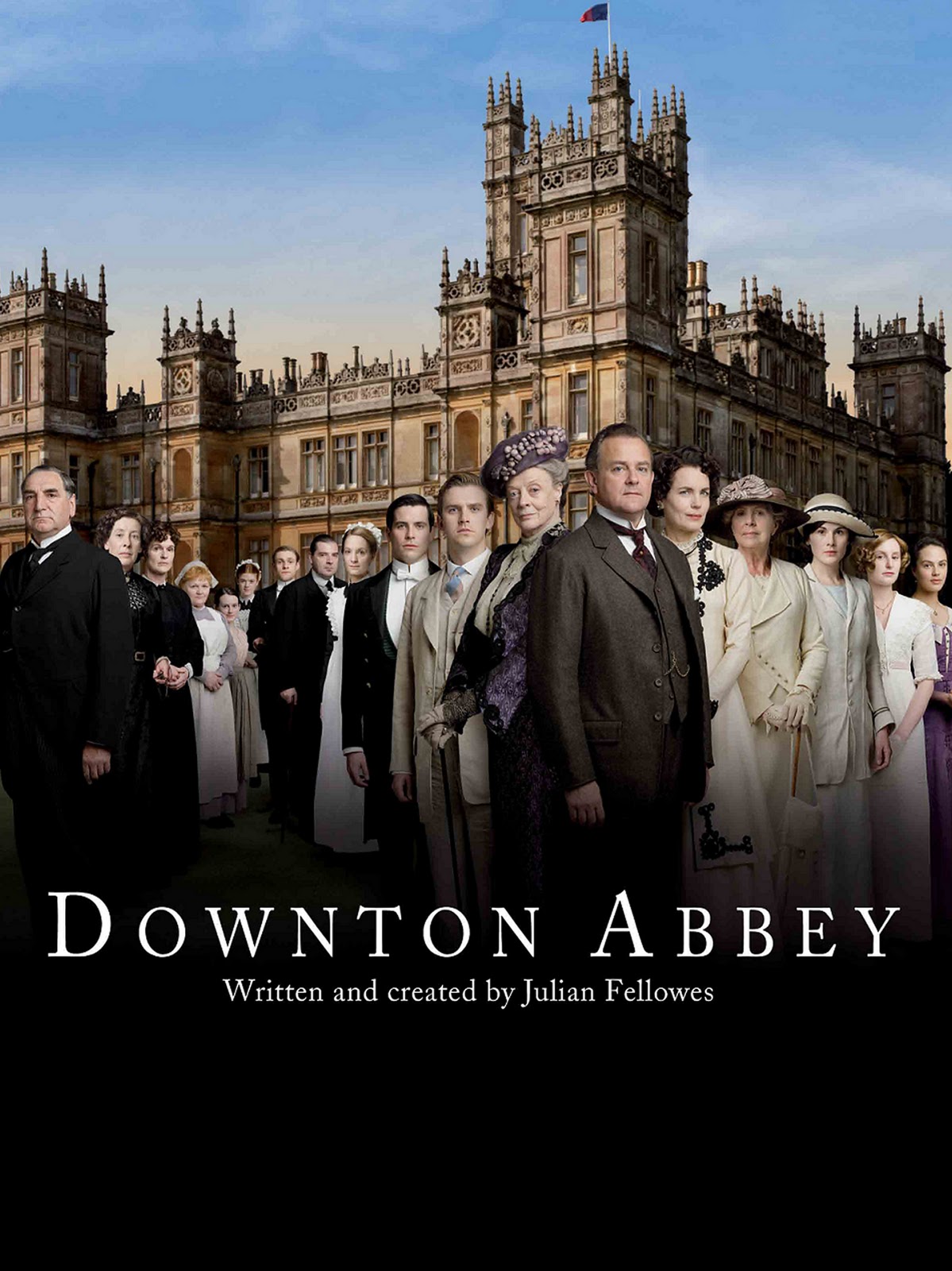
The fact that there's only one season of this phenomenal show available on Netflix shouldn't deter you from from adding it to your must-see list. Set during the early 1900's, Downton Abbey follows the lives and times of a family of aristocrats and their servants. It's a marvelously written show, not only when you consider the caliber of the characterization and dialogue, but note just how many characters this show has and how well they're all developed. The show boasts somewhere around 20 regular cast members, not including the multitudinous recurring and guest cast. If you've heard anything about this show, you've likely heard how Maggie Smith (who plays the Dowager Countess Grantham) is practically worth watching this show for alone, and that's absolutely the case. She's matronly but sharp, sophisticated but never minces words, and like every other aspect of this show brilliantly realized. But trying to pick out a favorite character or aspect of this show is incredibly challenging for me because I just love every moment of it. It's a Masterpiece Classic type of piece in the same tradition as Brideshead Revisited or Upstairs Downstairs but in my estimation superior to both of those titles. I'm keeping this snippet somewhat brief because a million thoughts come to mind as points of interest, but taking on any one of them would require more verbiage than can adequately describe this show. Suffice it to say that if you're in the mood to watch a BBC/Masterpiece Classic period piece to rival any similar title up to this point in history - consistently well-written, engaging, and completely entertaining - you can't do better than Downton Abbey.


THE INBETWEENERS

This show isn't one you'll note for its subtlety or brilliance, but the title will tell you more than you might expect. The Inbetweeners is a half-hour British sitcom that follows the day-to-day of 4 students at the fictional Rudge Park Comprehensive school. Will (Simon Bird) is the bookish, previously private school attending, briefcase carrying (for which he earns the moniker, "briefcase wanker") straight thinking one of the bunch. His close friend Simon (Joe Thomas) is more of an everyman type of high school kid - not really fitting into any one stereotype or another. In contrast to both of them is Jay (James Cartwright), a sex-obsessed teen whose self-proclaimed exploits are always exaggerated and the the dim-witted but well meaning Neil (Blake Harrison). Over the course of 3 seasons (and a subsequent movie) The Inbetweeners chronicles the hurdles, failures, embarrassments and - occasionally - triumphs of growing up; navigating that "in between" time post-childhood but just before true adulthood. As the principle characters are all male, the perspectives are decidedly male as well. Which is to say, there's less about nostalgia and self-reflection and more about the time Will soiled his trousers during an exam, or Simon's repeated attempts and failures to lose his virginity. It's a pretty raunchy show that put me in mind of a television version of Superbad or American Pie, but if you're in the mood for uncouth jokes it's pretty entertaining. The characters are simple enough to be relateable on some level, but still nuanced enough to give the impression that you've known people just like them at various times growing up. Only the first two of the existing three seasons are available at this time on Netflix, but that's two season's worth of humorous teen exploits we've all be in or around at some point in our lives.


MAD MEN

Here's another show you're probably at least somewhat familiar with by reputation alone. Set in the late 50's and early 60's, Mad Men follows the goings on of a handful of characters in and around early Madison Avenue - hence the title. Jon Hamm is the primary lead on the show, and much like the rest of the show's characters, is a complex mix of charm and darkness. Mad Men isn't the kind of show with "bad guys" and "good guys," rather each character is rendered in a much more human and realistic way. Certain characters have larger shortcomings than others, at least so it would seem, but the show is much more concerned with character study than character resolution. It can best be described as a novel adapted to the screen. Some episodes cover the events of a few days, others the events of a few hours; there's not a specific formula here. It's very precise, and the pacing of the show is often rather slow - but that only further serves to painstakingly explore each character depicted, weaving a narrative filled with cigarette smoke, liquor in the office, and more than a measure of infidelity. The lives of the principle characters aren't particularly romanticized, but neither are they demonized; again the aim is merely to explore and chronicle rather than pass narrative judgment. But despite the absence of a full scale endorsement, there's a great deal in the show that's just fun to look at. The first and most notable thing of course are the fashions of the era, revived and revitalized into a new kind of retro television chic. As the show is about the ad industry, a lucrative business to this day, most of the principle characters live relatively opulent lifestyles and it's fun to watch them schmooze and smoke with other sharply dressed schmoozers and smokers. Simply put, Mad Men is a surprisingly understated entry in a TV scene dominated by sound bites and flashy commercials and as such provides a nice throwback to a less in-your-face viewing experience. It's not the kind of show with lots of twists or surprises, and it's not the kind of show that's out to look back at bygone eras through rose-colored glasses. Personally, that's reason enough. But layer on top of that some wonderfully nuanced writing and acting, some top notch production design, and a cast of surprisingly engrossing characters and Mad Men is near the top of my list of all-time favorites.


PEEP SHOW

British humor can be a bit of an acquired taste; especially when it comes to the subtleties of their self-deprecating and dry bits. But arguably the best place to get acquainted with that comedic tradition is Peep Show; a BritCom steeped in cynicism and black humor. The show has a couple of rules in terms of format that further lend themselves to the overall feel it achieves. First off, with the exception of establishing shots of building or locations, everything else is POV. That is, the camera only shows what the characters in the scene are seeing - through their eyes. This can be a little strange to get used to, as conversations involve the characters involved looking directly at the camera according to the "POV rule" the show employs. Second, and just as important, the inner monologue of the two main characters - Mark and Jeremy (David Mitchell and Robert Webb, respectively) - is audible whenever their POV is being used. This not only gives us further insight into what makes these characters tick - comedically and otherwise - but further allows for the exploration of innovative narrative techniques. So where two characters talking back and forth might be missing each other's point, we as the audience are clued into the little thoughts that precede their spoken sentences. Again, it takes a little getting used to. But once you're familiarized with the characters and their various habits and foibles it's a brilliantly hilarious show. David Mitchell's take on Mark is one of the stereotypical tight-wad - he's a hopeless cynic with some pretty severe self-esteem issues and as such offers up some of the most humorous moments the show contains. Jeremy, on the other hand, is a care free musician whose scruples are sketchy at best. The two contrast each other - one austere, the other puerile - to pitch perfection and have fantastic comedic chemistry. If you're not a fan of darkly comedic and dry British wit, you might find Peep Show a bit too odd for your tastes. But if you enjoy that kind of humor, Peep Show is one of the best examples available in which to experience it.


THAT MITCHELL AND WEBB LOOK

The stars of Peep Show get another mention in this entry, but this time for their sketch comedy show That Mitchell and Webb Look. Where Peep Show follows a fairly linear narrative of its two protagonists, That Mitchell and Webb Look is your run-of-the-mill sketch comedy show with an audience laugh track. A number of recurring sketches abound here like "Numberwang," a zany and mile-a-minute gameshow with a set of completely unintelligible rules. "Get Me, Hennimore!" is a spoof on 70s sitcoms in which a bumbling employee (Webb) tries not to confuse the understandably difficult instructions his boss (Mitchell) gives him. For example, he's told to ensure that a group of Korean chefs in room "Room 1" do not get mixed up with a group of dog lovers in "Room I." Another of my favorite sketches from this show is "The Surprising Adventures of Sir Digby Chicken Caesar" which follows a homeless drunk Sir Digby (Webb) and his equally street-weary sidekick Ginger (Mitchell) - both of whom are under the delusion that Digby is a brilliant detective. It's a sketch comedy show, so by its very nature it's a hit-and-miss affair. In fact, one sketch has Mitchell and Webb "behind the scenes" mapping out the order of "hits" and "misses" to be used in the next episode. Despite abandoning some brilliantly realized characterizations in Peep Show, the duo continue to prove they're a fantastic pair when it comes to comedy and a number of faces from Peep Show you'll recognize here - or vice versa. As the comedy is more decidedly geared to British culture and pop culture, you may find there are a decent handful of jokes or sketches that aren't particularly understandable. But even with those, That Mitchell and Webb Look has a fantastic array of various sketches and bits and you're bound to find at least a few morsels to give you a good laugh.


THE WONDER YEARS

When this show was added to Netflix, I was surprised to discover how many of my friends weren't familiar with it. I practically grew up on this show and it's been a favorite of mine since I was a little kid. The Wonder Years is set in the late 60s and early 70s, a time when America was going through some significant changes. Those changes are mirrored in the life of its principle character, Kevin Arnold (Fred Savage) as he navigates the wonder of his growin' up years. (Ha! See?) The show is narrated by an adult Kevin (voiced by Daniel Stern) as he reflects back on the times depicted in each episode with varying emotional tone. Danica McKeller plays Winnie Cooper - Kevin's lady love, and the girl with whom Kevin has a relationship that runs the gamut from girlfriend to friend to estranged and back again. Josh Saviano is Kevin's best friend Paul Pfeiffer - a skinny bespectacled lad with a number of allergies. Kevin's family is equally colorful; his father Jack (Dan Lauria) is an old fashioned man who only occasionally shows his less abrasive side while his mother Norma (Alley Mills) provides a more nurturing counterpoint to her husband's rough exterior. Wayne, (Jason Hervey) is a somewhat stereotypically thick-headed older brother, who lovingly referes to Kevin as "butthead." Rounding out the Arnold family is the rebel daughter Karen (Olivia d'Abo), whose various forays into the counterculture of the time offers up some of the show's meatier moments. The Wonder Years is largely episodic, jumping from vignette to vignette as Kevin makes his way through middle school, high school, graduation, and everything that lay between. It's a profoundly nostalgic show that often goes right for the heartstrings. This is accomplished through Stern's pensive and well-articulated narration, the show's brilliant soundtrack (a mix of the popular music of the era and some gentle acoustic guitar original score), and occasional stock footage of historical events. The show isn't wholly a comedy, though there are some genuine laughs peppered throughout. And it's not completely a drama either, though more than a few episodes will give you cause to mist up. It simply romanticizes the bittersweet experience of adolescence in a way I've not yet seen another show accomplish, and it's hardly lost its acuity over the course of the 20 years or so since it aired. Even if you're not a child of the 60s and 70s, The Wonder Years explores universal experiences with a sincerity unparalleled.

Thanks for tuning in!

Tuesday, September 18, 2012

Resident Evil: Retribution

You might have seen the headlines proclaiming that Resident Evil: Retribution was top dog at the box office this weekend. I admit I was among those who contributed to its financial success, and I admit that I did so knowing full well that I was going to see the fifth Resident Evil movie.

With that in mind, I don't feel that my usual PROS/CONS/VERDICT will be sufficient to relay my experience watching this movie. And while I tried to resist the urge to just bash on this movie with snark and disparaging but (hopefully) humorous remarks, I've been unable to resist any longer. So below you will find a post that is a kind of mutant itself; cobbled together from prose, objective criticism, and all the things I found worth making fun of in Paul W. S. Anderson's latest entry in the series.

I give you...

Resident Evil: Regretribution


So as I mentioned, I went to see Resident Evil: Retribution over the weekend. Now, I'm not about to sit here and tell you I expected anything good to come out of that movie. All I really cared to see were some entertainingly choreographed fight scenes and hopefully some gore. A recent Cracked.com article raised several points about how the films are objectively better than the games, and while I didn't whole-heartedly agree with a few of its arguments, I was completely on board with its attempt to call out people who rip on blockbusters just because that's what's "in" these days.

That's a thing people do now, I guess. Sorry, Michael Bay.

"You are forgiven."

And to give credit where credit is due, there were a couple of fight scenes that definitely kicked ass. My favorite is this one where Alice (Milla Jovovich) takes on these zombies coming at her 2 and 3 at a time with a pistol and a makeshift meteor hammer - double teaming them with a little bit of that high choreography type of thing Go-Go Yubari employs against The Bride in Kill Bill: Volume 1. It's fun stuff - majorly fun stuff.

But there were some things about that movie that were so bad, so unexpectedly and unnecessarily bad - even for a movie like this - that I found myself genuinely surprised; despite my low expectations for this movie from the get-go.

First off, I don't know what was penned on the heavens ages ago that says "And whither he goes, he shall enter into theaters and they shall be empty. And he shall find a comfortable seat, and lo, he shall have plenty of room on either side of him. Then shall they come to the place where he is, saying, 'We have surveyed this empty theater and wish to rest ourselves where he is.' And though the rest of the theater be empty, many throngs shall rest themselves next to him - forsaking all other empty seats in the building. And up from their midst shall arise a clamor, such that none will be allowed to speak without shouting over them. For behold, they make their chatter known from the beginning of the little thing at Regal Cinemas where you ride a virtual roller coaster all the way until the credits roll. Yea, this shall he find whither he goes. And whence has been born uncomfortable sitting situations, he shall keep his elbow on the arm rest - lest they should be taken from him. But verily as it is written, so shall those sitting next to him be passive-aggressive losers without so much as the balls to just ask him to move down a seat. And in their distress, they shall make grand gestures with their arms, ironically flailing them about straight out in front of them so as to make him feel guilty for not giving them the arm rests. But he shall not give up his arm rests, he shall not cave to their passive aggressive attitudes, because seriously - screw those guys. And it shall come to pass that those sitting to his left will rise up, and in a fervor, step over him to take another seat elsewhere. But mark this, how they go not out of earshot, so that he might hear the exasperated sighs and frustration of those he hath prevented from stealing his arm rests. For he had the foresight to arrive well in advance of the start of the showing. For he had the foresight to choose a seat apart from all others, so as to maximize the potential to avoid such unwashed masses. And verily, he shall not be punished for their misdeeds. And seriously, screw those guys."

I don't know where that's written, but I'd like to have it edited to include less of everything.


That had nothing to do with the movie, I just wanted to get it off my chest.

Now moving on to the movie itself. To begin with, they've always been poorly acted. Not terribly acted, just poorly. Resident Evil: Retribution apparently thought, "You know what? All that mediocre bad acting needs to be replaced with some super terrible acting now...let's go for broke!" Milla can do drama when she has to - the film Stone is a great example. She's not gonna win an Oscar, but she can pull it off in a pinch. In the opening moments of the Retribution however, you'd never know it. There's an establishing scene where one of her clones finds herself under attack in the middle of a city which we soon find out is just a simulation that the evil-for-the-sake-of-being-
evil Umbrella Corporation uses to test the effectiveness of their completely ridiculous viruses. But Milla's strongsuit is action movie stuff, holding guns at the screen while looking coldly into the camera, punching the lights out of her enemies and then standing over them in that comic book heroine pose that says "I'm tough, but I'm also open to potentially spending a night with you and your vintage Princess Leia Golden Bikini costume." 
"Hehehe...I'm doing excellent feminism."
What she's not good at is basically anything else she does in the movie; screaming and fleeing in terror. Not tip-toeing through her house while holding a baseball bat like Shelley Duvall (haha, women!) in The Shining and shaking it so violently to indicate she's "scared" that you can practically hear Anderson off screen going "Milla. Milla? Milla! Yeah, Yeah. Just shiver a little more, shake your hands so we see how scared you are of that potted plant....Yeah, yeah, like that!!!"

With a few of the characters - particularly Ada Wong (Li Bingbing) - apparently Anderson saw The Room and thought: "Yeah, post dubbing is always a good idea!" and decided to do just that. ADR isn't always a bad thing with the right actors and the right sound technicians, but neither of those applied here apparently. The worst actors in the film are the only ones whose lines end up re-dubbed in post and they're all the worse for it. Like...almost Tommy Wiseau levels of that-line-doesn't-even-match-their-body-language bad.

Integrating your exposition can be difficult as a writer, I'm no stranger to that. And a lot of times you have to hide exposition in little details and conversations to keep the audience up to speed...zis is common in ze movies. Anderson didn't even try. Or...maybe that was him trying...hrm...
Alice wakes up in a holding cell wearing nothing but - I kid you not - two pieces of surgical paper on either side of her body that just barely covers everything needing to be covered - you might recall them from Resident Evil: Apocalypse. But here they're even smaller. Don't get me wrong, Milla is a gorgeous woman in my estimation, but she looked ridiculous. 
Feminism strikes again.
 So moving on she wakes up in that state, and is then basically broken out of her cell by as-of-yet unidentified characters. But not before her cell door slides open with - gasp! - armor and equipment for her to wear. Because the last thing you want to do is leave your enemy without properly ridiculous tight-fitting clothing that conveniently pops out of the wall as soon as someone comes to break them out. Then she ends up in a big open room and one of the characters of both franchises, Albert Wesker, appears on a large screen staring into the lens with all the villainous charisma his hair-slicked-back-and-wearing-sunglasses-indoors look can afford him. Up to this point in the series he's been a bad guy, but circumstances necessitate him joining forces with Alice under the whole "enemy of my enemy is my friend" thing. A twist! She asks where she is, he launches into an explanation that includes a brief history lesson about her location (no lie), including the fact that it's a former submarine facility from the Cold War. Completely unnecessary, but he drones on like it'll have some importance to the film. Spoiler, it doesn't. She asks what's going on, and he then launches into "The Exposition Part of the Movie" where there's literally a shot-counter-shot of Alice on the ground staring up at Wesker on this big screen. She asks a question, he pontificates. For about...10 minutes this goes on without interruption. Ya know, because Alice doesn't have a clue what's going on, so neither does the audience, and someone has to tell her!
"Hehehe. I'm doing excellent screen writing."
I'm not being too hard on Anderson here; he is genuinely capable of more. The first 15 minutes of the film catches the entire audience up on 4 films' worth of material in a way that was both innovative and entertaining. So, no slack for you!

Later on, a "Strike Team" consisting of just a couple of other characters from the film and game who have no canonical reason to know each other arrives to help Alice. Amongst them is the protagonist of RE4, Leon S. Kennedy. He looks like a video game character in the game, as he should. Which is to say he looks like this:


Paul W. S. Anderson saw that design and thought "Yeah, that totally wouldn't look ridiculous in the real world!" and rendered him thus:
That's him there on the left, with the ridiculous hair falling in his eyes - obscuring any attempt he makes to take a clear shot at advancing hordes. Seriously, his middle-parted superbangs get in his eyes so often in the movie it literally defies physics that he survives when Umbrella assassins and zombies drop like flies. I'm not ragging on long hair here, but you won't see me wearing it like a pair of stringy sunglasses at midnight: hideous, in my eyes, and completely unnecessary. And look at that expression: basically the one expression he wears the entire film. Yup, that's him...  good ol' Leon "Here Comes the Smoulder...*fart*...Haha Whoops, I'm So World Weary" Kennedy.

Let's take a closer look at that scene, shall we? In the above image, Alice is arguing with Leon (who really needs a cough drop, or is apparently obsessed with his own really really bad Batman impression) about going after this little girl who was just dragged away by a monster. This is actual dialogue, I kid you not.

Leon: "Don't do this."
Alice: "I won't leave her."
Leon: "You're more important than she is."
Alice: "That's where you're wrong."
Leon: "This is a mistake."
Alice: "That's what you think."
Leon: *Gritty Face*...*Constipated Face*...*World-Weary Mercenary Face*

Bear in mind we're talking about a little girl who was literally just dragged away kicking and screaming calling for Alice by the name "Mommy!". Oh, and did I mention she's deaf? So one of our heroes in this movie would rather let a deaf child perish in terror and anguish than just let someone else go after her. A little deaf girl who was alive and kicking (pun totally intended) not 20 seconds ago. Yeah Leon is supposed to be this hardened badass, but I mean c'mon....He basically said "Naaah....forget that kid." to a woman who has rescued him (and everyone) in the movie multiple times. But maybe he was afraid he wouldn't be able to find her in the sea of tall grass he has to peer through the whole movie.
 "Is anyone else having a hard time seeing through all this grass? It's everywhere, like...oh god I think it's attached to my head!!!!"

In all honesty, no hyperbole in this statement, the little deaf girl is the best actor in the whole movie and most of what she does is scream and run holding Alice's hand. I will give Anderson props for figuring out that little emotionally manipulative trick: kids = pathos, usually. Special needs kids = pathos, always. So I cared about this kid and what happened to her; I wanted her to survive all the improbabilities. But her little subplot with Alice had less to do with the overall arc of the film than the characters of the franchise who don't even show up in the film.

So amidst stringy-haired anti-hero types that flex whenever they're on screen (take a look at that second Leon image again), to women like Ada Wong who fight their way through hordes of assassin's and undead in a red dress and stiletto boots, to some of the most wooden acting and dialogue this side of a gritty Pinocchio reboot...Resident Evil: Retribution proves that movies you expect to be pretty bad can be even worse.

Also, I love slow motion. I really do, especially in a movie like this. But I would be willing to bet that about 20 minutes of run time would be shaved off the final tally if everything was played back at normal speed. No exaggeration, no lie; this movie would be notably shorter without the slow motion. Though frankly, the slow-motion fight scenes were what I came to see so that's not technically a complaint. 

Am I sorry I contributed to Resident Evil: Retribution's #1 spot at this weekend's box office? But for the philistines and troglodytes in attendance with me, no I'm not. And I'll probably go see the next one when it comes out. But there's a difference between being bad in all the right ways and just plain bad. Retribution tries to be the former, but hilariously falters and falls on a whoopee cushion in the latter category. The 3D looks fantastic, the visual effects are pitch perfect, the fight scenes are thrilling and when Milla is doing her "gunslinger girl" thing she's pretty good too. But trying to find anything else even marginally acceptable in this movie is like trying to make "fetch" happen.

Friday, August 17, 2012

Netflix Nuggets #2

I'm back with another smattering of reviews for another smattering of titles from Netflix! Some you might be familiar with, others you may have never heard of. But that's precisely what this blog is here for. Enjoy!


GRIFF THE INVISIBLE

With the sustained presence of superhero movies in theaters lately, its almost hard to imagine a time when comic book adaptations were virtually non-existent. In the 80s and early 90s, the few superhero movies that had made waves financially and critically were by far the exception rather than the rule. But with the popularity of superheroes and comic book adaptations on screen rising to prominence comes the added opportunity to explore new facets of that mythology. Enter Griff the Invisible, an Australian film about an office grunt named Griff (Ryan Kwanten) who moonlights as a masked vigilante. His life changes when he meets a girl named Melody (Maeve Dermody) who seems to share his non-conventional view of the world at large. It sounds all-too familiar at first, but the film soon makes clear that this isn't another comic book movie. Bumping up against the nature of reality itself, Griff the Invisible asks the audience to question - right along with the film - the merit of what it means to live in the "real world." The film shows us how Griff sees himself; the romantically idealized version of his costume is muscled and fitted with numerous gadgets. But when we get a glimpse of him from another character's perspective we see that his suit is - in the "real world" - an ill-fitted collection of custom fabrics and plastics one might find on the lesser end of a cosplay contest. But again, the film doesn't seem overly concerned with forcing the main character or the audience to validate one perception over the other. Instead, we're left to determine for ourselves which reality is more "real," and at the end of the whole affair I didn't feel existentially confounded or befuddled. For all its sensible ambiguity, Griff the Invisible is a surprisingly accessible commentary on life and love and the nature of reality, with a few laughs thrown in for good measure.

MELANCHOLIA

The plot of Melancholia isn't complicated. The implications of some of its themes, on the other hand, are incredibly profound. The film primarily charts the disintegrating relationship between two sisters. Justine (Kirsten Dunst) is a newlywed who clearly suffers from severe bouts of depression. Her sister Claire (Charlotte Gainbourg) is the more sensible and grounded of the two - at least at first. Chronicling Justine's wedding reception and the day after, the film delicately paints a portrait of a family decaying from within. Justine's depression is a source of tension for several of the principle family members, and the passive aggressive behaviors exchanged amongst the cast (which includes John Hurt, Kiefer Sutherland, Stellan Skarsgard, and others) are rather difficult to watch. Underpinning the tension within the family is the fact that a rogue planet is heading for Earth. Some fear it will destroy us, others believe it will pass Earth by. The film states quite early on that Earth will be destroyed by the rogue planet, aptly named Melancholia, and the rest of the film plays out as more of a character study of minds and souls in crisis. Melancholia is a beautiful film, if an incredibly depressing one. Conveying the tepid attitudes of its primary character beautifully, the film itself evinces depression and melancholy with only a measure of subtlety. The symbolism of the film isn't particularly hard to decipher, and the opening images feature a high frame rate slow motion that almost makes the images displayed appear as a painting on screen - accompanied by the overture to Wagner's Tristan und Isolde. I wouldn't recommend watching Melancholia if you're in a good mood, because it's likely to sour it a bit. But if you find yourself in a place of placidity and emotional withdrawal, you might find that Melancholia resonates brilliantly with such a mood. Regardless of how you might choose to view it, there's no denying the inherent beauty of Lars Von Trier's ponderous piece.

PEGGY SUE GOT MARRIED

Remember Back to the Future? Of course you do, because it's awesome. Well, in the wake of that movie's subsequent success another, somewhat lesser-known piece involving time travel was released: Peggy Sue Got Married. Peggy Sue (Kathleen Turner) is a divorcee whose life seems but a shadow of the dreams she held as a young girl. At her high school's 25 year reunion, she collapses inexplicably only to wake up a few decades back, once again a high school student in 1960. The film follows her as she weighs in on the relationships and choices she made growing up - wondering how she'll seize the opportunity to change her life. There's no science-y related mumbo-jumbo to go along with this time-traveler's tale, but there's a great deal of charm and laughs in Francis Ford Coppola's Peggy Sue Got Married. Nicolas Cage plays Peggy Sue's future husband/boyfriend in high school Walter, and he hilariously affects a gawky teenage posture and somewhat squeaky voice. A handful of familiar faces populate the supporting cast, including Jim Carrey as the school jokester (what else?), Kevin J. O'Connor as the brooding but poetic bad boy, and a 14-year old Sofia Coppola as Peggy's younger sister. Much like Back to the Future, the movie enjoys showcasing its retro sensibilities with a vintage soundtrack, classic cars, and classic clothing. But where it differs from Back to the Future is in its more serious tone. Peggy Sue's struggle to determine if she should continue her relationship with Walter, knowing he will be unfaithful and eventually break her heart, isn't glossed over. And the ultimate implications of her final decision aren't shied away from either. But that's tempered brilliantly by some well-placed laughs and an ultimately uplifting ending. And while this certainly isn't one of Cage's more insane performances, it is still on the list of what makes Cage such a curiously compelling actor to watch. Peggy Sue Got Married isn't quite on par with its "sister film" Back to the Future - though they both share undeniable similarities. But for what it's worth, Peggy Sue is still a delightfully nostalgic jaunt back to two eras: 80s movie-making and early 60s vintage Americana.

PRIMAL FEAR

Every now and again a movie will steal a fantastic title that doesn't really represent what the movie is about. Primal Fear, though an engaging thriller, is just such a film. While the title (and even poster) might give you the impression that this movie is some kind of supernatural and atmospheric horror flick, it is instead a court room drama. Martin Vail (Richard Gere) is the kind of lawyer that lawyer jokes are made about. His moral compass is pretty obviously broken, as a handful of expositional conversations expose him as a lawyer famous for "putting the victims on trial" and getting well-funded clients off on technicalities. But when an altar boy named Aaron Stampler (Edward Norton) is accused of murdering an archbishop, with a near-overwhelming pile of circumstantial evidence implicating him, Vail decides to take the case pro-bono because he genuinely believes in Stampler's innocence.
I love courtroom drama films. I'm not sure what exactly it is about this cinematic subgenre that rarely fails to engross me but I was drawn to this film on those merits alone. Fortunately there's a good deal more to it than the usual examination/cross-examination antics that populate these films; including one of the best performances of Edward Norton's career. Laura Linney also works in a solid performance as the prosecuting attorney and a former lover of Martin Vail's, further complicating interpersonal relations within the film. Primal Fear isn't likely to keep you on the edge of your seat, it's not the kind of harrowing thriller that involves chase scenes or noir lighting techniques. But its well paced and makes its way around a few surprising twists during its run time, resulting in a solid entry in the courtroom drama/thriller subgenre.

LES EMOTIFS ANONYMES (ROMANTICS ANONYMOUS)

Looking for a heartwarming, feel-good romantic comedy from France? Something with which to follow up Amelie perhaps? Look no further than Romantics Anonymous, a quirky little piece that follows the budding romance between a shy but talented chocolatier named Angelique(Isabelle Carre) and her equally shy boss Jean-Rene Van Den Hugde (Benoit Poelvoorde). I almost didn't want to use the word "quirky" in the previous sentence, because that word has so indelibly become linked with a very specific kind of awkward indie comedy, or just with Zooey Deschanel. But here, there's an irresistible sincerity to the film's quirkiness that transcends Hollywood tropes. It's not just because the film is French; the principle characters are both undeniably charming. While their awkward romance encounters numerous pitfalls along the way, some profoundly wince-inducing, the movie never resorts to gags or gimmicks to get its laughs. Instead, memories of our own romantic misadventures are called to mind with a wistful nostalgia. Throughout the film, the French version of "I Have Confidence" from The Sound of Music permeates the soundtrack and in one brilliant moment, that scene is reconstructed shot-for-shot with Angelique. After watching this delightful little film I did some reading up and found that the Romantics Anonymous meetings that the principle characters attend is an actual organization that the two leads often frequent. That doesn't come as a bit of a surprise given how genuine their performances are and further adds another layer sincerity to an already disarmingly honest film. Feel-good foreign cinema really doesn't get much better than this, folks.

SCENT OF A WOMAN

Martin Brest is known for a few things. The first one has to be that he was a favorite of bullies and name-callers growing up for his familial surname. The second is that his last film - thus far - was unforgivably bad. It starred Ben Affleck and Jennifer Lopez and if you don't recognize it from that clue then thank your lucky stars. The third is that before he torpedoed his career he made two romantic dramas that shared three things in common: 1) They were pretty good. 2) They were both scored, beautifully, by Thomas Newman. 3) They were both over 2-and-a-half hours long. One was Meet Joe Black, the other was Scent of a Woman. For some reason these two films almost feel like companion titles to me though they share little in common, and incidentally Meet Joe Black is on Netflix as well at the moment. But getting back to the task at hand, Scent of a Woman follows a young man named Charlie Simms (Chris O'Donnell with an undeniably 90s haircut) who takes a weekend job working as a companion to a blind and foul-tempered retired Army Lt. Col. named Frank Slade, played by Al Pacino. Frank is gruff and standoffish and generally the kind of curmudgeon needed as a foil to Charlie's youthful optimism. But over the course of the weekend Charlie begins to understand Frank and his seemingly unforgiving ways, and in turn Frank develops a subtle appreciation for his youthful companion. It's not a wholly unfamiliar plot by any stretch of the imagination and Brest plays all the expected notes emotionally. But there are some great quotes from Pacino and one or two tear-jerker moments that elevate this movie above the kind of tropes that seem fit for a 'heavy episode' in a conventional TV sitcom. A much  younger Philip Seymour Hoffman also makes an appearance as one of Charlie's prep school classmates. The film wraps up with Pacino giving a rousing and profoundly stirring speech about the nature of character and integrity to Charlie's prep school and while, again, the cliche is worn out and tired as ever - I still couldn't resist the swelling of the orchestra and the force of Pacino's voice. It wobbles on the border of kitschy at times, but for all of that it's still a wonderfully uplifting piece that - at 157 minutes - unfolds slowly, but surely.


STRICTLY BALLROOM

Here be the first of Baz Luhrmann's famous "Red Curtain Trilogy," so named not because they share a common narrative but because each film (Strictly Ballroom, Romeo+Juliet, and Moulin Rouge!) each open with the raising of a red curtain. Strictly Ballroom opens on a faux-documentary style vignette into the world of competitive ballroom dancing. A collection of talking head interviews relates the story of how talented hoofer Scott Hastings (Paul Mercurio) began performing his own flashy dance moves during a competition, costing him and his partner Liz Holt (Gia Carides) the victory. The movie then reverts back into a typical narrative style, albeit with Baz's signature low angle closeups and Bollywood-like cinematic choreography. Scott is soon approached by another aspiring dancer named Fran (Tara Morice) who convinces him to teach her "his way" of dancing so that they can compete in the Pan-Pacific competition together - only weeks away. What follows is an enjoyable, if predictable, romantically comedic romp through the world of competitive dancing, learning to follow your heart, Cyndi Lauper's "Time after Time", and a host of charmingly lampooned 'ugly duckling' and 'Cinderella' stereotypes. Baz's directorial debut showcases an already insightful cinematic perspective, and numerous moments in the film play out like practice for techniques and choreography he would later exploit in Moulin Rouge! This 1992 romantic comedy isn't nearly as frenetic or ultimately intense as 2001's Moulin Rouge!, but his signature style is very much apparent in nearly every frame. Being a fan of Luhrmann's work, this was a huge plus for me and suited the production design of the film itself marvelously. I don't know much about dancing at all, but this is the kind of film that transcends personal experience with its subject matter to be enjoyable and heartwarming regardless. Any fan of Luhrmann, romantic comedies, or dancing in general would be well served to add this to their "Must See" list.


That concludes Netflix Nuggets #2! Stay tuned for a soon-to-come special entry in the Netflix Nuggets series: TV Edition.